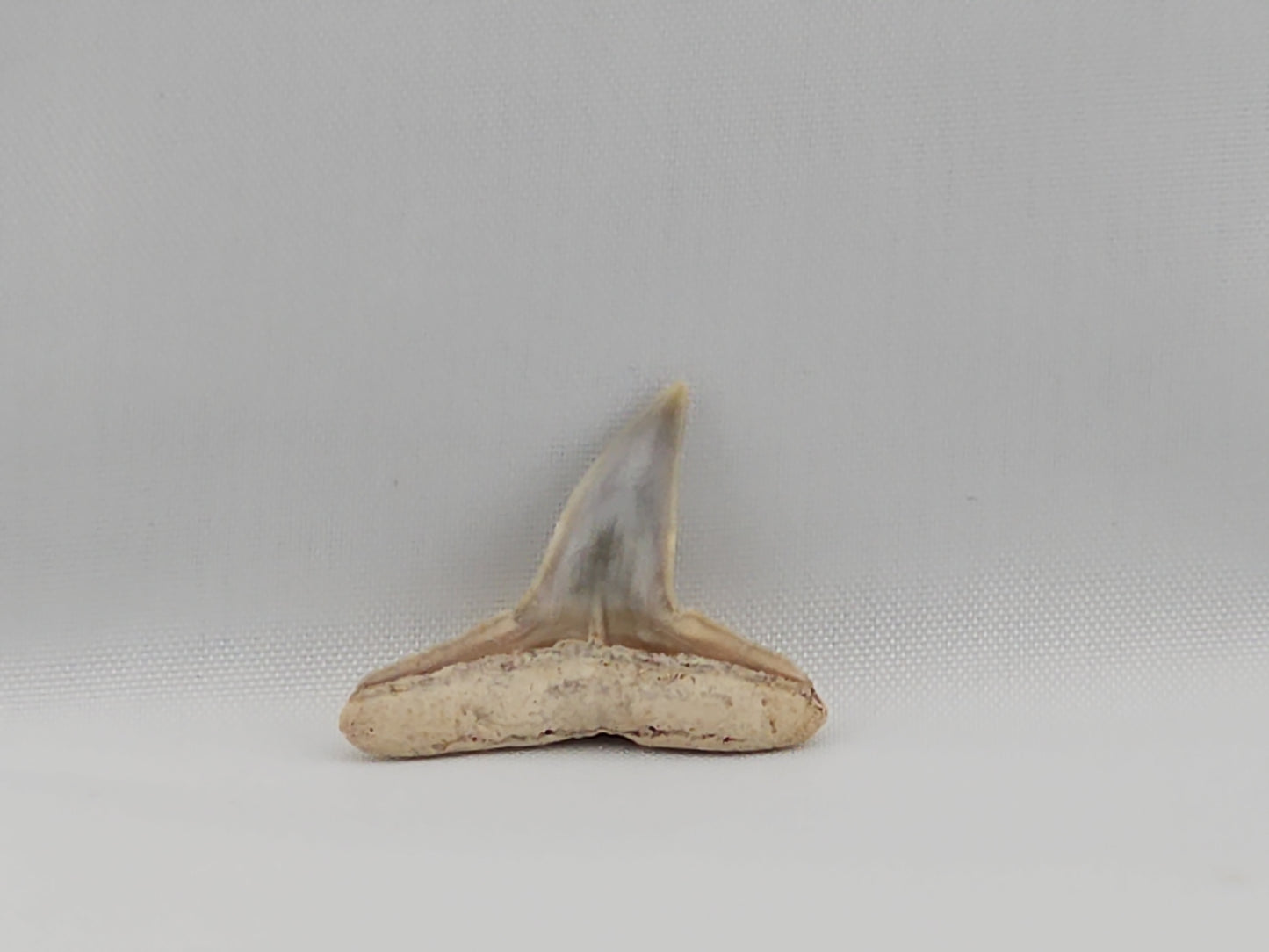
Lemon Shark Tooth ID#54
Lemon Shark Tooth ID#54
Couldn't load pickup availability
Common Name: Lemon Shark
Scientific Name: Negaprion brevirostris
Epoch:Miocene
Fossil Type: Tooth
Fossil Size: 0.83 Inches 2.1 cm
Location Found: Florida
Info about Negaprion
The Negaprion genus has two known extant species and one known extinct species (N. eurybathrodon). The negaprion genus dates back to the Eocene (56mya). Negaprion brevirostris, commonly known as the lemon shark, is one the living species which is found throughout the west coast of Africa, to the coasts around the Americas. The other extant species is Negaprion acutidens, (also known as the sicklefin lemon shark) which is found near India and south-east Asia. Both species are opportunistic apex predators and will eat just about any marine animal, but they primarily feed on fish and crustaceans. N. brevirostris has caused 10 unprovoked shark attacks, leading to 0 fatalities. While, N. acutidens has caused no known unprovoked shark attacks.
References:
Family carcharhinidae: . Carcharhinidae: Whaler Sharks. (n.d.). http://www.elasmo-research.org/education/shark_profiles/carcharhinidae.htm
Fossil Friday 6/5/15: A lemon shark tooth. Panama Canal Project (PCP PIRE). (2025, June 4). https://www.floridamuseum.ufl.edu/panama-pire/blog/fossil-friday-6515-a-lemon-shark-tooth/
Lemon Shark. Discover Fishes. (n.d.-a). https://www.floridamuseum.ufl.edu/discover-fish/species-profiles/lemon-shark/
Species implicated in attacks. International Shark Attack File. (n.d.). https://www.floridamuseum.ufl.edu/shark-attacks/factors/species-implicated/
Visaggi, C. C., & Godfrey, S. J. (n.d.). Full article: Variation in composition and abundance of miocene shark teeth from Calvert Cliffs, Maryland. https://www.tandfonline.com/doi/full/10.1080/02724630903409063
Share